Japanese Designer Issey Miyake is another name to lean, and not just because it's fun to say.

Miyake grew up in Hiroshima and when he was 7 he witness the A-bomb dropped on the city in 1945. He graduated in graphic design from Tama Art University, Tokyo, then worked in Paris and New York. He enrolled at the Ecole de la Chambre Syndicale de la Couture Parisienne (renowned tailoring and dressmaking school in Paris), he worked behind the scenes for four years for Laroche, Givenchy, and Beene. In 1970, he set up the Miyake Design Studio in Tokyo, and displayed his first independent collection in 1973. He won the Japan Fashion Editor's Club Award in 1974, and the Pratt Institute, New York Award for Creative Design in 1980.

Miyake merged Japanaese and Western styles, and Bloomingdales devoted a section to selling Miyake's 'East meets West', and became an internationally recognised name in the 1980's. The 'East Meets West' collection was mostly T-shirts with Japanese tattoo designs and coats featuring the 'sashiko' Japanese embroidery technique.
In the 1980's he began experimenting with pleats (well who wouldn't?) to allow greated flexibility for movement of the wearer and ease of care. He won the International Award of the Council of America Fashion Designers in 1984 (which sounds a lot like a very well dressed crime fighting team imo), the Neiman Marcus Award in the same year (before he was an expensive American store, Neiman Marcus was an influential fashion designer).
In 1993 he produced Pleats Please, in which the clothes were cut and sewn then sandwiched and heat pressed to pleat the fabric. The collection combines technology, functionality, and beauty, and was on display at the Pompidou Centre.

In the late 1990's Miyake began working with Dai Fujiwara on A POC (A Piece Of Cloth), using new processes that harness computer technology, industrial knitting or weaving machines to create clothing beginning with a single piece of thread. A POC was launched commercially in 1999, but Miyake refused to put his name on the collection, insisting it was an ensemble piece, he sold it as a long tube of jersey and let the customer cut and shape it.
In 2006, he became the first fashion designer to receive the Kyoto Prize in Arts and Philosophy for lifetime achievement, from the Inamori Foundation in Japan- he got a diploma, 20-karat-gold prize medal, and 50 million yen ($446,000). Which ain't bad. The Pleats Please collection was singled out as allowing 'unrestricted body movement while enabling the fabric to maintain its form', and the aforementioned A POC.
In 2007, Dai Fujiwara became the new Creative Director of the House of Issey Miyake. In 2010 Fujiwara worked with mathematician William Thurston to create 'beautiful geometry', with the mathematic thought providing structure and elegance to the crazy rainbow styling.


And that's Miyake!


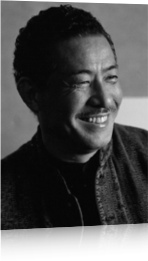 Miyake grew up in Hiroshima and when he was 7 he witness the A-bomb dropped on the city in 1945. He graduated in graphic design from Tama Art University, Tokyo, then worked in Paris and New York. He enrolled at the Ecole de la Chambre Syndicale de la Couture Parisienne (renowned tailoring and dressmaking school in Paris), he worked behind the scenes for four years for Laroche, Givenchy, and Beene. In 1970, he set up the Miyake Design Studio in Tokyo, and displayed his first independent collection in 1973. He won the Japan Fashion Editor's Club Award in 1974, and the Pratt Institute, New York Award for Creative Design in 1980.
 Miyake merged Japanaese and Western styles, and Bloomingdales devoted a section to selling Miyake's 'East meets West', and became an internationally recognised name in the 1980's. The 'East Meets West' collection was mostly T-shirts with Japanese tattoo designs and coats featuring the 'sashiko' Japanese embroidery technique.


 In the late 1990's Miyake began working with Dai Fujiwara on A POC (A Piece Of Cloth), using new processes that harness computer technology, industrial knitting or weaving machines to create clothing beginning with a single piece of thread. A POC was launched commercially in 1999, but Miyake refused to put his name on the collection, insisting it was an ensemble piece, he sold it as a long tube of jersey and let the customer cut and shape it.


 I made a new dress this week, after I went shopping with my dad and his cash! for a father's day get together. I got 5 pieces of remnant fabric and a cool bundle of vintage green velvet trim for £3 (I estimated it had about 9 metres on to start with), and each piece of fabric was £1. The pink piece I used for this week's dress had a label on which said £15 a metre and I got two metres for £1- score!
 It's a hot pink colour, I think synthetic, shiny, upholstery best describes it, but makes it sound hideous. I turned it over and used the matt side as the right side for my dress. I then used the green trim around the waist and top of the dress to break up all the pink. I still think there's too much pink in the dress, it's quite a strong over powering shade but I like it. I used McCalls pattern M6331 variation B which I used before to make a dress from a second hand duvet cover. It worked really well last time (surprisingly well) and was so complimented I was compelled to make it again. I don't think this turned out as well as the first attempt- I think the colour is too strong and the pattern on the fabric I used last time worked really well with the design.




 Bought another second hand duvet cover from a charity shop, this time only a single, for £1.99, and used a pattern I had bought online, McCalls M6331, for about £5, I made this dress. I had to adjust it slightly from their design as my zip was too short and I didn't want to have to buy another one as the local shop overcharges for zips imo. But I think that actually added to the 50's style.


